A first draft worth arguing with
MAIA checks the context, builds the campaign, challenges weak spots and returns a cleaner deck for your team to shape.
Context and opportunity
The brief is set against market, audience, culture, competitor context and useful timing signals before routes are written.
First pass
MAIA builds the idea, routes, framework and channel thinking as one connected campaign, not loose fragments.
Challenge
The work is pushed against brand tone, claims, channel fit, market rules, distinctiveness and high-stakes creative judgement.
Refine
Weak parts are tightened, feedback stays useful, and obvious risks are dealt with before the deck reaches the room.
Build out
The strongest route becomes pages, one-pagers, mockups and reviewer views people can react to.
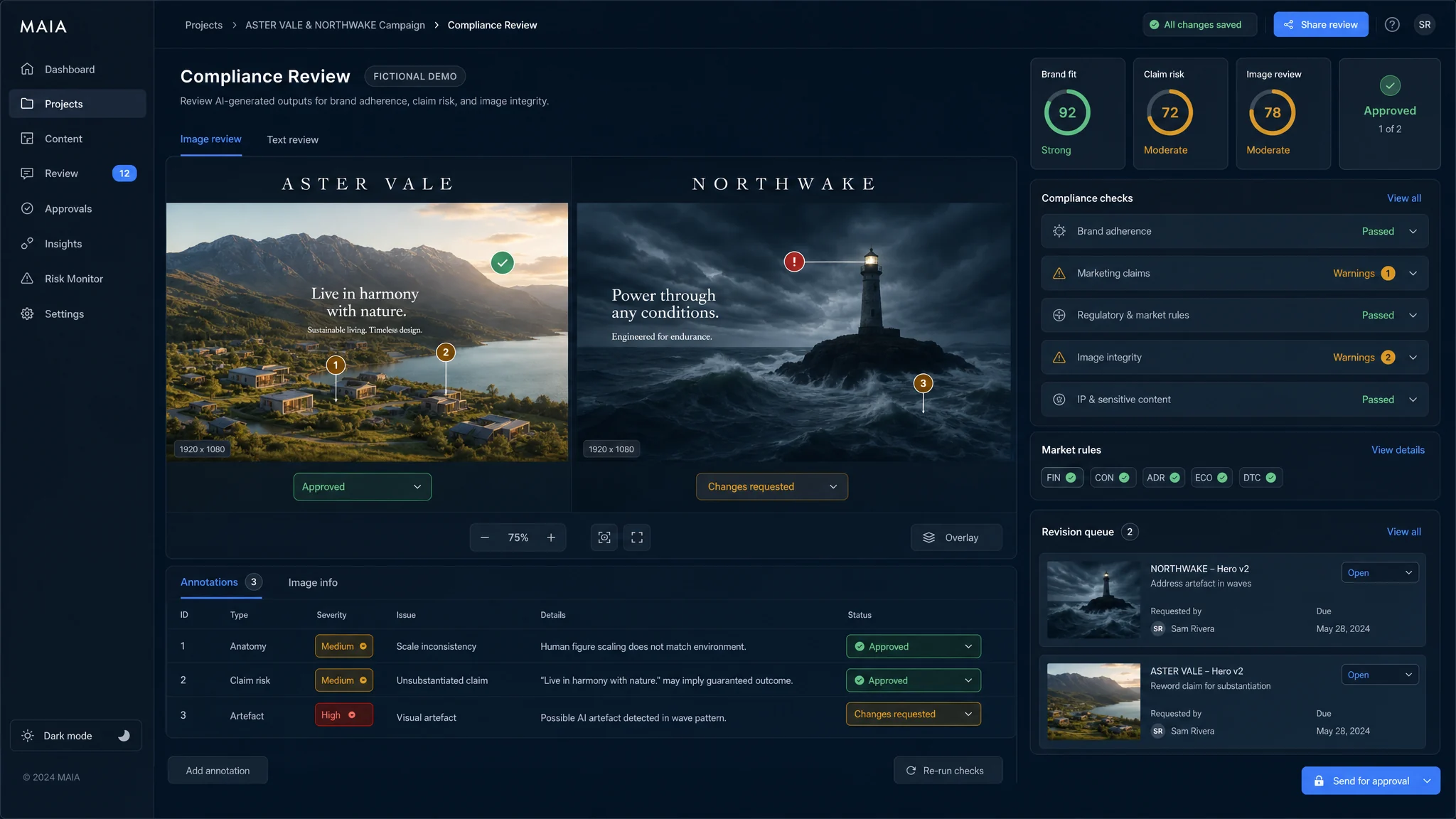
The review pass has the brief in its teeth.
It knows what the work is meant to be, so it can push back properly.
No good strategist trusts the first draft. MAIA does not either.
How the engine works
Bring a brief that usually takes weeks to untangle.
In 30 minutes, we will show the first serious pass and the checks behind it.